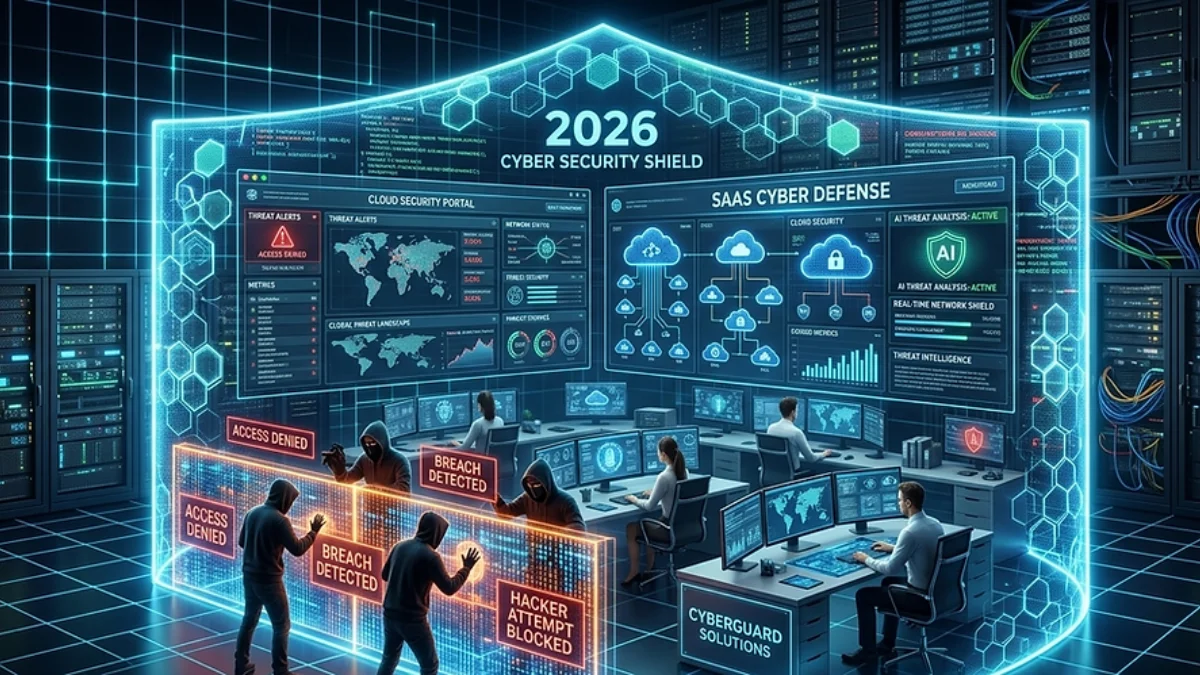

In 2026, cybersecurity trends 2026 will continue to evolve rapidly, driven by AI advancements, sophisticated cybersecurity threats, and new defense strategies. Along with rising global cyber attacks USA, every organization must act proactively to protect data online. Still, understanding these patterns will allow businesses to implement the right security solutions 2026 and minimize risk.
Emerging Cybersecurity Trends 2026 in AI
In 2026, AI is reshaping the entire cybersecurity landscape, influencing both attacks and defenses. Along with accelerating cybersecurity threats, AI is helping organizations anticipate and respond to risks faster than ever before.
AI‑Fueled Cybersecurity Threats
AI is not just a defensive tool, it also powers some of the most advanced cybersecurity threats. Meanwhile, attackers are leveraging AI to automate social engineering and malware strategies.
Key trends:
Automated phishing campaigns using natural language generation
Self-learning malware adapting to defenses
AI-generated voice cloning for social engineering
For instance, early 2025 saw a cyber attacks USA incident where AI-generated voice calls tricked employees into sharing VPN credentials, resulting in over $2M loss. In addition, these attacks often spread faster than traditional malware.
Impact:
Increased attack speed
Higher success rates for social engineering
Greater pressure on security infrastructures
Still, organizations that integrate AI detection tools can identify anomalies earlier and reduce breach windows significantly.
Identity Attacks and Zero Trust Expansion
Beyond malware, stolen credentials remain among the top cybersecurity threats in 2026. At the same time, Zero Trust architectures are becoming essential for mitigating these risks.
Statistics:
Approximately 68% of breaches begin with compromised identities, and this number is expected to grow. Along with credential theft, privilege misuse remains a major challenge.
Core elements:
Multi-factor authentication (MFA) adoption
Adaptive access policies
Zero Trust architectures
Notably, cyber attacks USA incidents in healthcare doubled due to weak identity verification. On the other hand, organizations adopting strict access controls reduced incidents by more than 70%.
| Sector | 2024 Breaches | 2025 Projected | Main Vectors |
|---|---|---|---|
| Healthcare | 1,200 | 1,650 | Credential theft, phishing |
| Finance | 900 | 1,100 | API misuse, privilege escalation |
| Retail | 750 | 1,000 | POS malware, identity misuse |
As a result, strong identity security is now critical to minimize breach pathways and maintain trust.
Security Solutions 2026 Aligned with Cybersecurity Trends
Security solutions 2026 must be proactive, data-driven, and adaptive. Along with advanced tools, organizations also need strategic policies to remain resilient.
Next-Gen Endpoint Defense in Cybersecurity Trends 2026
Traditional antivirus tools are now insufficient. At the same time, advanced endpoints provide predictive defense.
Modern endpoint features:
Behavioral analytics
AI-based anomaly detectors
Real-time threat scoring
For example, a U.S. retailer integrated machine learning and reduced malware dwell time by 45% in 2025. Next, organizations should combine these tools with continuous monitoring for best results.
Zero Trust Security Frameworks
Zero Trust continues to dominate discussions of security solutions 2026. Along with identity management, it ensures continuous verification.
Core Principles:
Verify every access request
Enforce least privilege
Continuous monitoring
Meanwhile, a 2025 federal audit showed agencies adopting Zero Trust reduced unauthorized access events by 70%, demonstrating practical effectiveness.
Cloud Security and Configuration Hygiene
Most workloads now reside in the cloud, so misconfiguration remains a major threat. In addition, organizations need strict governance to protect data online.
Best practices include:
Automated configuration scanning
Immutable infrastructure deployments
Policy-driven compliance checks
Even though cloud providers secure infrastructure, user responsibility still matters. Along with technology, staff awareness and process controls make cloud security effective.
Industry-Specific Cybersecurity Trends 2026
Different industries face different cybersecurity threats. Meanwhile, awareness of sector-specific risks helps allocate resources efficiently.
Financial Services
Banks face AI-driven fraud and API abuse. In addition, insider misuse and credential theft remain persistent risks.
Key points:
Real-time cross-border transaction attacks
AI-driven fraud exploiting open banking APIs
Insider misuse of privileged tools
In 2025, a U.S. bank lost $15M due to API credential exposure. Next, firms increased multi-layer monitoring to prevent similar attacks.
Healthcare and Patient Data
Healthcare organizations are prime targets for ransomware and identity theft. Along with traditional breaches, double-extortion attacks are rising.
Mitigation strategies:
Device segmentation
PHI encryption
Strict access protocols
Even small adjustments, like secure IoT device policies, can significantly reduce risk.
SMBs
SMBs often lack enterprise-grade defenses. Meanwhile, attackers exploit these gaps due to limited budgets.
Quick wins for SMBs:
Centralized patch management
Cloud-based detection tools
Security training for staff
Along with these measures, SMBs can reduce exposure while staying cost-effective.
How to Protect Data Online in 2026
Actively defending data is essential. Along with technical controls, human awareness and policies remain crucial.
Encryption Everywhere
Encryption protects sensitive data in transit and at rest. In addition, strong encryption reduces secondary attack risks.
Key practices:
Full database encryption
TLS for all API communication
End-to-end encryption for remote access
For instance, 2025 breaches often involved plaintext data exposure, underlining the importance of encryption.
Continuous Monitoring and Threat Hunting
Static defenses alone are insufficient. Meanwhile, proactive monitoring detects threats before damage occurs.
Components:
SIEM with AI correlation
Dedicated threat hunting teams
Real-time log aggregation
Along with technology, skilled staff are critical to respond promptly.
User Awareness and Training
Humans remain a major factor in cybersecurity threats. Still, consistent training reduces mistakes.
Training focus:
Recognizing deepfake and AI phishing
Safe remote work practices
Reporting suspicious activity promptly
Even short, recurring simulations can dramatically improve vigilance.
Investment and Workforce Preparedness
Budget allocation and talent readiness are key in 2026. Along with technology, human resources drive security effectiveness.
Budget Shifts in 2026
Organizations are investing more in AI-based detection, identity verification, and readiness exercises. In addition, proactive spending reduces breach costs long-term.
Forecast: Security budgets are projected to rise by 30–40% year-over-year.
Skill Gaps and Hiring
Cybersecurity talent shortages persist. Meanwhile, internal upskilling complements external hiring.
In-demand roles:
Cloud Security Architects
AI Security Analysts
Threat Hunters
Identity and Access Managers
Along with certifications, practical hands-on training improves resilience.
Conclusion
Cybersecurity trends 2026 emphasize AI threats, persistent identity risks, and the critical role of proactive defenses. Along with Zero Trust and cloud security, organizations must adopt effective security solutions 2026 and training programs. As reported by UpdateNet Worth, organizations that implement these strategies early see measurable reductions in breaches.
To stay secure and protect data online, take action today and update your cybersecurity frameworks accordingly.
FAQs
What are the biggest cybersecurity trends in 2026?
What are the biggest cybersecurity trends in 2026 include AI-powered attacks, Zero Trust adoption, cloud security challenges, and identity-based threats. Along with these, organizations are focusing on proactive detection tools and staff training to reduce risks from cyber attacks USA and other emerging threats.
How will AI impact cybersecurity in 2026?
How will AI impact cybersecurity in 2026 by enabling faster, more sophisticated attacks, such as automated phishing and deepfake social engineering. At the same time, AI helps in threat detection, predictive monitoring, and incident response, forming a core component of security solutions 2026.
What is Zero Trust and why is it important in 2026?
What is Zero Trust and why is it important in 2026 is a framework that verifies every access request and enforces least-privilege policies. Along with strengthening identity controls, Zero Trust helps organizations protect data online and reduce unauthorized access in an era of complex cybersecurity threats.
How can small businesses prepare for cybersecurity threats in 2026?
How can small businesses prepare for cybersecurity threats in 2026 by implementing centralized patch management, cloud-based detection tools, and regular staff training. Even with limited budgets, SMBs can follow cybersecurity trends 2026 to reduce exposure to cyber attacks USA and safeguard sensitive information.
Which industries are most at risk for cyberattacks in 2026?
Which industries are most at risk for cyberattacks in 2026 include healthcare, finance, retail, and government sectors. Along with general cybersecurity threats, these industries face AI-driven attacks, ransomware, and credential theft, so prioritizing security solutions 2026 is essential to protect data online.
How can organizations protect data online in 2026?
How can organizations protect data online in 2026 through encryption, continuous monitoring, AI-assisted threat detection, and staff awareness programs. Along with adopting the latest cybersecurity trends 2026, companies can reduce breach incidents and strengthen overall resilience against cyber attacks USA.
What role does cloud security play in cybersecurity trends 2026?
What role does cloud security play in cybersecurity trends 2026 is central as most workloads move to cloud platforms. Along with configuration management and policy enforcement, cloud security ensures organizations can protect data online while following the latest security solutions 2026.