
The era of the standard celebrity endorsement deal is officially dead. There was a time when a Hollywood A-lister or pop star would simply sign their name on a perfume bottle, film a single television commercial, and collect a static paycheck.
Today, the world’s most business-savvy stars have stopped renting out their faces to major corporations. Instead, they are building their own equity, securing venture capital, and constructing massive celebrity beauty empires.
By combining massive, direct-to-consumer social media reach with high-quality formulas, a handful of elite stars have built companies that operate at the highest echelons of the global cosmetics industry. At updatednetworth.com, we monitor the intersections of pop culture, business equity, and corporate valuations.
While the celebrity startup market can be notoriously crowded, these ten celebrity beauty brands worth millions have officially crossed the hyper-elite $500 million valuation milestone—with several charging past the billion-dollar mark.
The Economics of Celebrity Cosmetics
The rapid growth of these companies comes down to one massive structural advantage: zero customer acquisition cost (CAC).
Traditional beauty conglomerates like L’Oréal or Estée Lauder spend billions of dollars every year on advertising just to convince a consumer to try a new mascara. A celebrity founder with 100 million Instagram or TikTok followers can launch a product line globally with a single, free social media video.
When you eliminate marketing overhead and partner with premier beauty incubators (like Kendo or Seed Beauty), profit margins skyrocket. This exact framework has allowed modern stars to build valuable corporate entities in record time.
10 Celebrity Beauty Brands Hitting Half a Billion (or More)
1. Fenty Beauty (Rihanna)
Estimated Valuation: $2.8 Billion – $3 Billion
The Power Metric: Over $550 million in annual fenty beauty revenue.
When Rihanna launched Fenty Beauty in 2017 in partnership with LVMH’s Kendo brand, she didn’t just launch a makeup line—she forced the entire global beauty industry to change. By debuting with an unprecedented 40 shades of foundation (later expanded to 50), Fenty proved that inclusivity was both a moral necessity and an incredibly lucrative business strategy. Rihanna’s remaining 50% stake in the company makes up the absolute core of her billionaire status.
2. Rare Beauty (Selena Gomez)
Estimated Valuation: $2.7 Billion
The Power Metric: Crossed $400 million in net sales, driven heavily by its viral Soft Pinch Liquid Blush.
Selena Gomez’s Rare Beauty has evolved into one of the most commercially stable independent beauty brands on earth. Built around the concept of celebrating mental health and embracing individuality, the brand expanded its footprint heavily by launching into physical Ulta Beauty stores across North America. Despite Wall Street investment banks pitching the company for a potential sale, Gomez paused the process to retain her majority control and keep building the empire independently.
3. Kylie Cosmetics (Kylie Jenner)
Estimated Valuation: $1.2 Billion
The Power Metric: Coty Inc. purchased a 51% majority stake for $600 million in cash.
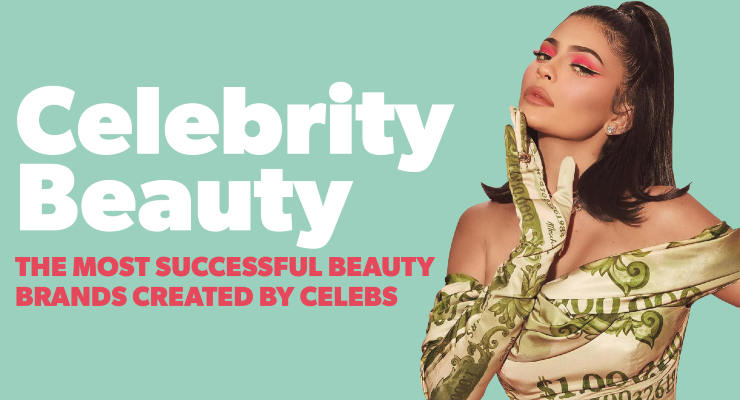
Kylie Jenner’s 2015 launch of her $29 Lip Kits is the blueprint for the modern celebrity beauty era. By utilizing her massive reality television fame, she built a company that generated hundreds of millions in sales with virtually no traditional marketing spend. While her personal net worth hovers around $670 million to $700 million following the Coty acquisition, her remaining 49% kylie cosmetics worth 2026 stake ensures she remains a major player in corporate beauty.
4. Rhode Skincare (Hailey Bieber)
Estimated Valuation: $1.0 Billion (Acquisition Value)
The Power Metric: Generated $212 million in net sales in the fiscal year ending March 31.
Hailey Bieber’s Rhode Skincare is the most recent brand to join the billion-dollar club. Centered around a minimalist, “glazed donut” aesthetic, the brand captured a massive Gen Z audience through clever viral marketing—including a viral phone case designed specifically to hold its signature peptide lip treatment. In a blockbuster move, mass-market powerhouse e.l.f. Beauty acquired Rhode for $1 billion, consisting of $800 million in upfront cash and stock plus a $200 million milestone structure.
5. Jeffree Star Cosmetics (Jeffree Star)
Estimated Valuation: $750 Million – $800 Million
The Power Metric: Operates a fully independent fulfillment center and distribution warehouse.
Long before TikTok took over the beauty space, YouTube beauty guru Jeffree Star built a massive direct-to-consumer empire. Known for ultra-pigmented eyeshadow palettes and edgy packaging, Star bypassed traditional retail partners like Sephora entirely, keeping 100% of his profits and managing his own logistics infrastructure out of Las Vegas.
6. Huda Beauty (Huda Kattan)
Estimated Valuation: $550 Million – $600 Million
The Power Metric: Early institutional investment from private equity firm TSG Consumer Partners.
Huda Kattan transformed a simple beauty blogging hobby into a worldwide empire. Huda Beauty began with a simple line of false eyelashes (famously worn by Kim Kardashian) and exploded into an international brand spanning full-coverage foundations, concealers, and lip contours sold across the Middle East, Europe, and the United States.
7. Victoria Beckham Beauty (Victoria Beckham)
Estimated Valuation: $500 Million+
The Power Metric: Turned her luxury fashion brand’s financial trajectory positive through high-margin clean cosmetics.
Victoria Beckham successfully applied her high-fashion, clean-living aesthetic to a premium makeup and skincare line. Positioned squarely in the luxury “clean beauty” market, the brand commands high price points for items like its viral satin cajal eyeliners and cell-rejuvenating priming moisturizers, making it a highly profitable enterprise.
8. REM Beauty (Ariana Grande)
Estimated Valuation: $500 Million
The Power Metric: Grande personally bought back the brand’s physical assets for $15 million following a licensee bankruptcy.
When REM Beauty’s initial manufacturing partner faced financial insolvency, Ariana Grande didn’t let her brand die. In a boss business move, she deployed her own capital to buy out the inventory, physical assets, and intellectual property. Under her direct control, the space-themed makeup line rebounded sharply, securing top-tier placement at Ulta Beauty.
9. Meaningful Beauty (Cindy Crawford)
Estimated Valuation: $500 Million
The Power Metric: One of the longest-running, most consistent celebrity skincare lines in history.
While younger celebrities rely on TikTok videos, supermodel Cindy Crawford built a massive, long-term empire using the direct-response infomercial model in partnership with Guthy-Renker. Focused entirely on anti-aging skincare, Meaningful Beauty has quietly generated massive revenues for over two decades through a highly loyal, monthly subscription-based customer pipeline.
10. Kora Organics (Miranda Kerr)
Estimated Valuation: $500 Million
The Power Metric: Distributed across thousands of retail doors in over 30 countries.
Supermodel Miranda Kerr was an early pioneer of the certified organic skincare market. Rather than launching a generic makeup line, she focused heavily on strict ECOCERT organic standards, utilizing unique ingredients like noni extract and rose quartz-infused waters. This distinct wellness positioning helped the brand capture a highly lucrative, health-conscious global consumer base.
Comparing the Top 4 Billion-Dollar Beauty Empires
To see how these massive operations compare on a corporate level, here is a breakdown of their primary financial structures and business strategies:
| Brand Name | Celebrity Founder | Primary Product Focus | Parent Company / Partner | Financial Milestone Status |
| Fenty Beauty | Rihanna | Inclusive Cosmetics & Hair | LVMH / Kendo | Multi-Billion Dollar Valuation |
| Rare Beauty | Selena Gomez | Community & Mental Health | Independent (Majority Owner) | Estimated rare beauty value at $2.7B |
| Kylie Cosmetics | Kylie Jenner | Lip Kits & Core Cosmetics | Coty Inc. (51% Majority Owner) | $1.2 Billion Enterprise Value |
| Rhode Skincare | Hailey Bieber | Minimalist Barrier Skincare | e.l.f. Beauty (100% Subsidiary) | Acquired for a flat $1 Billion |
The Ultimate Business Takeaway
The multi-million dollar celebrity beauty empires success of these ten brands proves that celebrity status is an incredible launching pad, but a sustainable business empire requires real corporate strategy. The founders who treat their beauty lines as serious, full-time corporate investments are walking away with historic financial valuations and redefining global retail.
Frequently Asked Questions
Why do so many celebrity beauty brands fail while these ten succeeded?
The “celebrity beauty graveyard” is full of brands that collapsed because the celebrity simply slapped their name on a standard, low-quality formula. The brands that survive and pass the $500 million mark offer genuinely high-quality, award-winning formulas that consumers continue to repurchase long after the initial celebrity hype wears off.
How much equity do these celebrities actually own in their beauty brands?
It varies heavily. Selena Gomez owns a true 51% majority stake in Rare Beauty. Kylie Jenner retains a 49% minority stake after selling her majority to Coty. Hailey Bieber transitioned to a Chief Creative Officer role while collecting a massive payout after her brand was fully bought out by e.l.f. Beauty.
Are celebrity skincare brands more profitable than makeup brands?
Yes. Skincare products generally boast much higher profit margins and produce higher customer lifetime value (LTV). While a consumer might buy a fun eyeshadow palette once, a high-quality facial moisturizer or serum is a repeat purchase that a customer re-orders every single month.
Does social media following directly translate to brand value?
Not always. A massive following helps with the initial launch, but true enterprise value is built on repeat business, strong wholesale retail partnerships (like Sephora and Ulta), and high operational margins.
Who runs the day-to-day operations of these massive companies?
While the celebrities serve as the public face and Chief Creative Officers, day-to-day business operations are run by seasoned consumer packaged goods (CPG) executives. For example, Rare Beauty is helmed by veteran CEO Scott Friedman, allowing the celebrity founder to focus entirely on marketing and product direction.