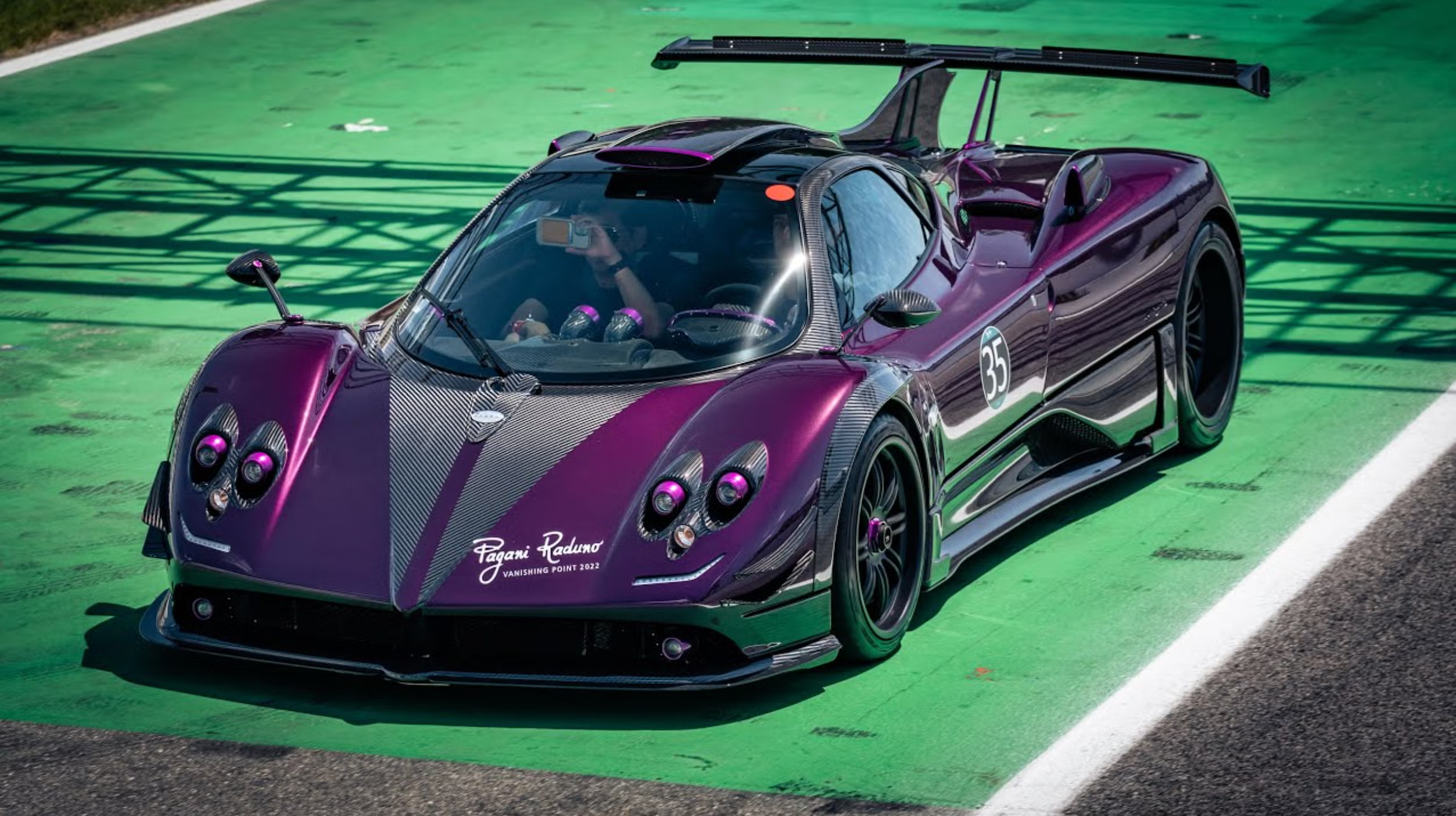
In the world of Formula 1, speed is a commodity, but on the streets of Monaco, style and exclusivity are the real currencies. As of 2026, the lewis hamilton car collection remains one of the most envied portfolios on the planet, even as the seven-time World Champion makes his historic transition to Ferrari. But among the sea of Ferraris and limited-edition Mercedes-AMGs, one nameplate has always stood out for its raw, unfiltered mechanical violence: Pagani.
While many fans are familiar with his “760 LH,” a cloud of mystery often surrounds the rumored $15 million Pagani Zonda HH. At updatednetworth.com, we are diving deep into the facts, the myths, and the jaw-dropping specs of the wild machines that have defined Hamilton’s life away from the paddock.
1. Setting the Record Straight: The Zonda HH vs. The 760 LH
First, we need to clear up a common piece of internet “misinformation” that has circulated for years. The Pagani Zonda HH is indeed a legendary one-off supercar, but it was actually commissioned by Danish programmer and racing driver David Heinemeier Hansson (the creator of Ruby on Rails), not Lewis Hamilton.
However, the reason Hamilton is so frequently linked to the “HH” is that he owned its spiritual twin: the Hamilton Pagani 760 LH. Both cars represent the absolute pinnacle of Pagani’s “760 series”—a line of bespoke, road-legal monsters that took the DNA of the track-only Zonda R and unleashed it on public streets.
The Pagani Zonda 760 LH: A Breakdown
Hamilton’s specific Pagani was one of the first one-offs in the 760 series. While the “HH” was finished in a stunning Monterey Blue, Lewis opted for a bold, royal purple carbon fiber weave that has since become iconic in car spotting circles.
Customization: Lewis famously insisted on a six-speed manual transmission. At a time when most hypercars were moving to paddle shifters, Lewis stated, “My company car has a paddle-change gearbox, so when I drive for fun, I want a manual.”
The Engine: A naturally aspirated 7.3-liter AMG V12 producing 760 horsepower.
The Status: In 2026, these one-off Paganis have skyrocketed in value, with similar models like Fernando Alonso’s “Diamante Verde” trading for well over $10 million.
2. The $15 Million Valuation: Why Is It So High?
You might wonder how a car that cost roughly $2 million in 2014 could be worth $15 million today. In the luxury asset world of 2026, “analog” hypercars have become the new gold.
The lewis hamilton pagani zonda isn’t just a car; it’s a piece of F1 history. Because Lewis was so involved in the spec—from the purple interior to the manual gearbox—the “provenance” (the history of ownership) adds a massive premium. Even though Lewis officially sold the 760 LH in late 2021 to a private collector for a reported $10 million+, the car’s legendary status and recent meticulous restoration after a 2023 tunnel crash have pushed its theoretical market value toward that $15 million mark.
3. Lewis Hamilton Car Collection 2026: The Ferrari Era
As Lewis moves into the 2026 season with Scuderia Ferrari, his personal garage is undergoing a transformation. While his environmental conscience led him to sell the gas-guzzling Zonda and switch to electric daily drivers like the Mercedes EQC, his love for “rolling art” hasn’t faded.
Current Highlights of the Collection:
Ferrari LaFerrari & LaFerrari Aperta: The ultimate “company cars.” Lewis has owned both the coupe and the convertible versions of Ferrari’s hybrid hypercar for years.
Mercedes-AMG One: The street-legal F1 car. Lewis was instrumental in the development of this vehicle, which features a literal F1 engine.
Shelby Cobra 427: A 1966 classic that Lewis reportedly had checked over by Carroll Shelby himself to ensure its authenticity.
McLaren P1: A nod to his early career roots with the team that gave him his first world title.
4. Comparing the F1 Driver Luxury Cars
How does Lewis’s taste compare to his rivals on the 2026 grid?
| Driver | Signature Hypercar | Key Feature |
| Lewis Hamilton | Pagani Zonda 760 LH | Manual Gearbox / Purple Carbon |
| Max Verstappen | Aston Martin Valkyrie | F1-inspired Aerodynamics |
| Fernando Alonso | Pagani Zonda Diamante Verde | Exposed Green Carbon / One-Off |
| Charles Leclerc | Ferrari Daytona SP3 | Matte Black “Monaco” Spec |
The trend among f1 driver luxury cars in 2026 is moving away from standard factory models and toward “one-off” commissions. Drivers want cars that reflect their personal brand, much like Lewis did with his Zonda over a decade ago.
5. The “Terrible Handling” Controversy
Despite its beauty, Lewis was surprisingly candid about the Pagani’s performance. In several interviews, he famously remarked that while the Zonda was the “best sounding car” he owned, it was also the “worst handling.”
For a driver who spends his weekends in a perfectly tuned F1 machine, the raw, tail-happy nature of a manual V12 Pagani was a handful. This honesty only added to the car’s legend—it wasn’t a precision instrument; it was a wild animal that only a champion could truly tame.
6. Real Estate for the Collection: Where Do They Stay?
Owning a $150 million car collection requires more than a standard two-car garage. Lewis spreads his assets across several high-security locations:
Monaco: Most of his supercars are spotted here, where the taxes are low and the roads are built for showing off.
Los Angeles: Lewis maintains a significant presence in the US, often seen driving his classic Cobras through the hills.
London: His $20 million Kensington mansion serves as a home base for his UK-based business ventures.
7. The Future of Hamilton’s Supercars: Sustainability
In 2026, Lewis is more focused than ever on his mission to reach Net Zero. This has created a fascinating paradox in his collection. He has publicly stated that he no longer drives his internal combustion supercars for leisure, preferring his electric fleet.
However, he hasn’t sold everything. He views his remaining classics as investments and pieces of history. The lewis hamilton supercars of the future will likely be bespoke, high-performance EVs that match his environmental goals without sacrificing the “wow” factor.
Conclusion: A Mechanical Legacy
Whether it’s the misunderstood Pagani Zonda HH or his actual custom 760 LH, the story of Lewis Hamilton’s relationship with Pagani is a testament to his desire for individuality. He didn’t just buy a car; he changed the way Pagani built them, ushering in an era where manual gearboxes and bespoke colors became the standard for the world’s elite.
As Lewis trades his silver and black for Ferrari red, the “Purple Pagani” will forever be remembered as the car that proved Lewis Hamilton isn’t just a driver—he’s a curator of speed.
For more deep dives into the portfolios of the world’s most successful athletes, stay tuned to updatednetworth.com.
Frequently Asked Questions (FAQs)
Does Lewis Hamilton still own the Pagani Zonda 760 LH?
No, Lewis sold the car in 2021 to a private collector in the UK. He reportedly made a profit of nearly $7 million on the sale.
Was the Pagani Zonda HH built for Lewis?
No. The Zonda HH was commissioned by David Heinemeier Hansson. Lewis’s car was the 760 LH.
Why is the Pagani Zonda 760 LH purple?
Purple is one of Lewis’s favorite colors (often seen on his helmets). He requested a custom purple-tinted carbon fiber for the entire body of the car.
What happened to the 760 LH after it was sold?
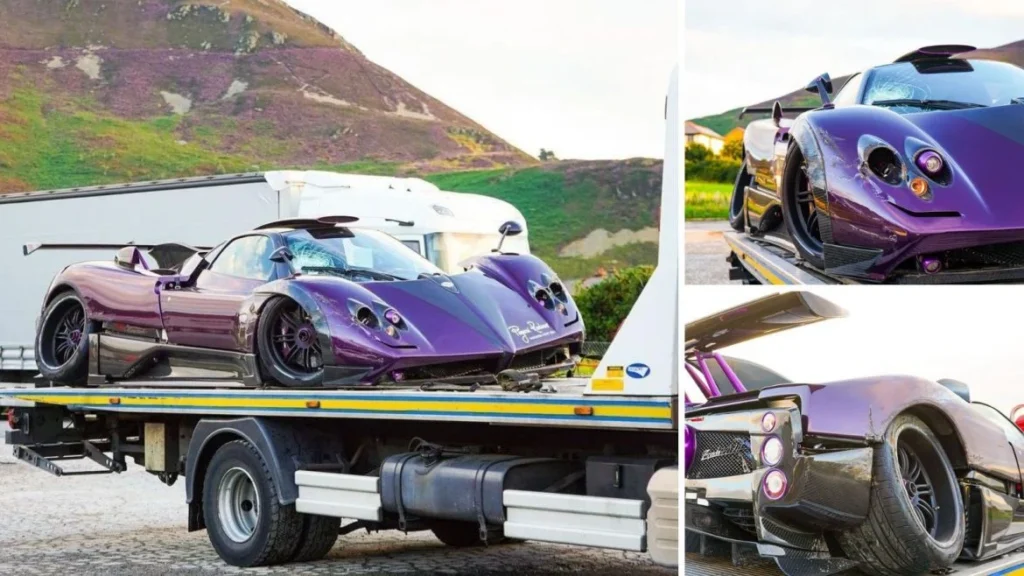
In 2023, the new owner crashed the car in a tunnel in Wales. It suffered significant damage but has since been fully restored by the Pagani factory in Italy.
What is Lewis Hamilton’s net worth in 2026?
With his massive Ferrari contract and various business ventures (like his film production company and non-alcoholic agave spirit), Lewis Hamilton’s net worth in 2026 is estimated to be over $450 million.